Comfortable, Expert Care You Can Trust
Hearing that you may need a root canal can feel worrying, but modern dentistry has made this
treatment far more comfortable than most people expect. At Distinctly Dental in Hatfield,
Hertfordshire, our experienced team focuses on making the entire process calm, clear, and as
comfortable as possible.
Root canal treatments at our practice are performed by Dr Denisa Cooper, an experienced
clinician known for her gentle, patient-focused approach and for helping even the most
nervous patients feel at ease in the dental chair.
Why a Root Canal Is Needed
Inside each tooth is a soft tissue called the pulp, which contains nerves and blood vessels. If
bacteria enter the tooth through deep decay, cracks, trauma, or failing fillings, the pulp can
become infected.
This infection may cause:
– Toothache or throbbing pain
– Sensitivity to hot or cold
– Swelling of the gum
– Pain when biting
– Occasionally, no symptoms at all
When the pulp becomes infected, the infection will not heal on its own. The bacteria must be
removed from inside the tooth to prevent the infection from spreading and damaging the
surrounding bone.
A root canal treatment removes this infection and allows the natural tooth to be preserved.
Why Antibiotics Alone Cannot Fix the Problem
Many patients ask whether antibiotics can treat a tooth infection instead of having treatment.
Unfortunately, antibiotics cannot fully resolve this type of infection because the bacteria are
located inside the tooth, where there is very limited blood supply. Antibiotics travel through
the bloodstream, so they cannot effectively reach and eliminate bacteria within the root canal
system.
Antibiotics may sometimes be prescribed to help control swelling or a spreading infection,
but they do not remove the source of the problem. For the infection to be properly treated,
the inside of the tooth must be cleaned through root canal treatment, or the tooth must be
removed.
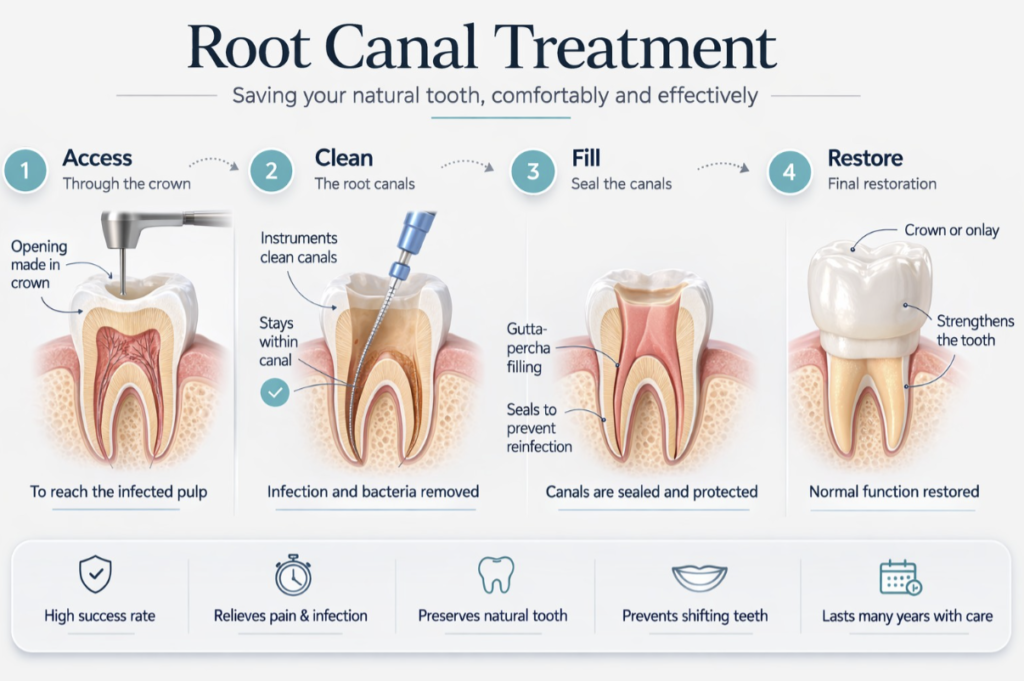
Step-by-Step: What Happens During a Root Canal
1. Examination and Diagnosis
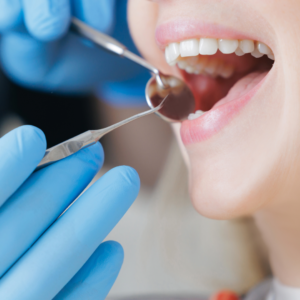
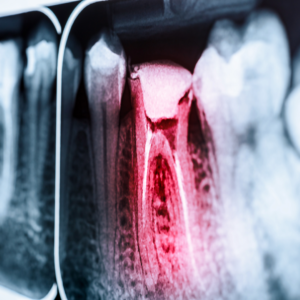
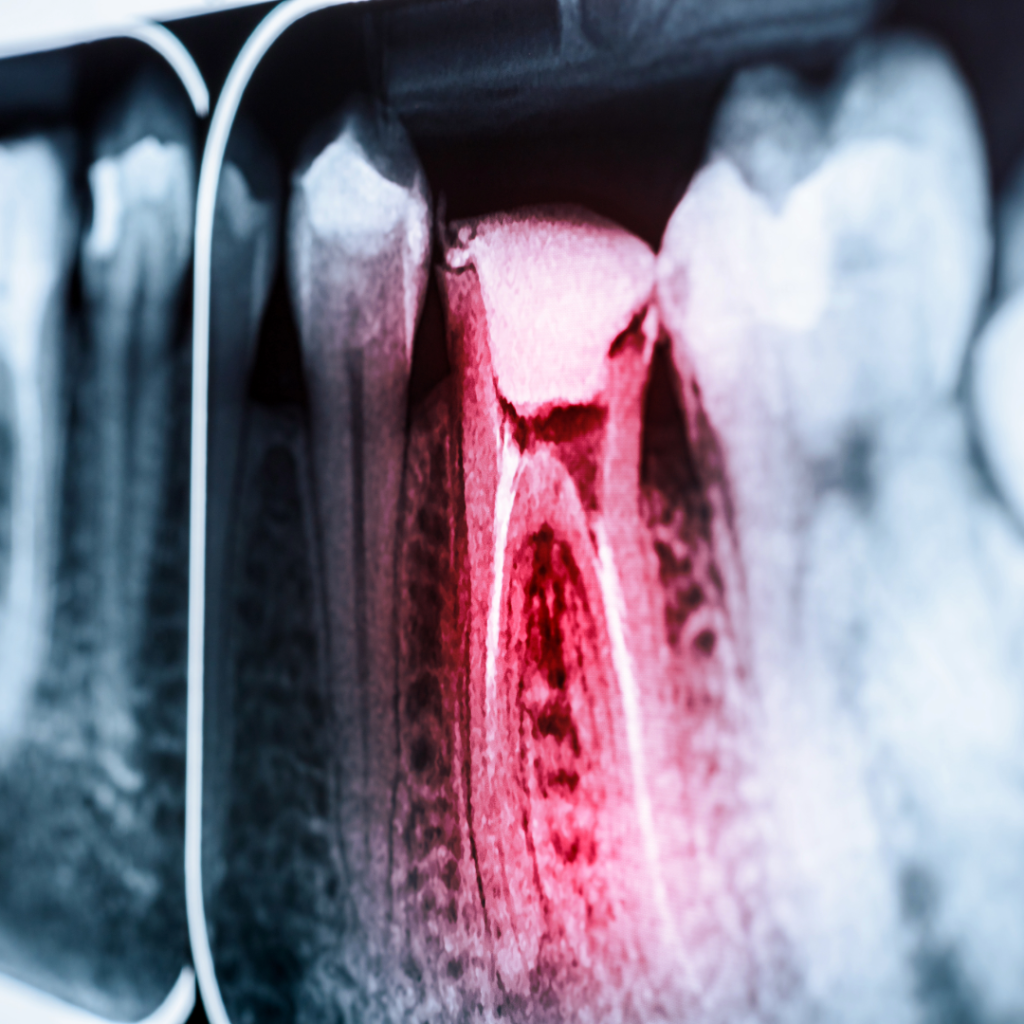
Your dentist will carefully examine the tooth and take X-rays to assess the infection and the
shape of the root canals. This helps us plan the safest and most effective treatment.
2. Local Anaesthetic for Comfort
The tooth and surrounding area are numbed with local anaesthetic so that the procedure is
comfortable.
3. Accessing the Tooth
A small opening is made in the top of the tooth to allow access to the infected pulp inside the
root canals.
4. Cleaning the Canals
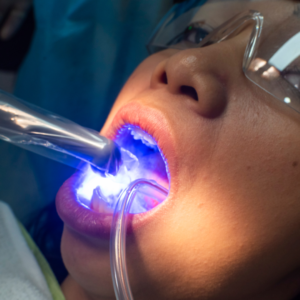
The infected tissue is gently removed using specialised instruments. The canals are then
thoroughly cleaned, shaped, and disinfected to remove bacteria.
5. Filling the Canals
Once the canals are clean, they are filled with a safe, biocompatible material that seals the
space and helps prevent reinfection.
6. Restoring the Tooth
After the root canal treatment is completed, the tooth must be restored. In most cases, a
crown or onlay is recommended to strengthen the tooth and protect it from fracture. In a
small number of cases, a filling may be sufficient, depending on how much of the natural
tooth structure remains.
Success Rates and Treatment Considerations
Root canal treatment has a high success rate, but like any treatment performed in the human
body, it cannot be guaranteed to succeed in every case.
Every tooth is different. Sometimes the anatomy of the root canals, the extent of infection, or
the condition of the tooth means treatment may be more complex. A thorough assessment
will always be carried out beforehand, but occasionally certain factors only become clear
during the procedure.
If a tooth cannot be successfully treated or restored, extraction may be recommended as an
alternative.
Root Canal Treatment vs Extraction
If a tooth is badly infected, there are usually two main options:
– Root canal treatment to save the tooth
– Extraction (removal of the tooth)
Whenever possible, keeping your natural tooth is usually the best option. Natural teeth
help maintain proper chewing function and keep neighbouring teeth in their correct positions.
If a tooth is extracted and not replaced, nearby teeth can gradually shift into the gap, which
may lead to bite problems, food trapping, or additional dental issues in the future.
Support for Nervous Patients
We understand that some patients feel anxious about dental treatment. Our team takes time to
explain every step and ensure you feel relaxed throughout your appointment.
For patients who are particularly nervous, intravenous (IV) sedation is also available. This
allows patients to feel deeply relaxed during treatment while remaining safe and monitored
throughout the procedure.
Specialist Referral in Complex Cases
Most root canal treatments can be successfully completed within our practice. However, in a
small number of particularly complex cases, it may be in the patient’s best interest to be
referred to a specialist endodontist (a dentist who focuses exclusively on root canal
treatments).
If this is recommended, our team will fully explain the reasons and help coordinate the
referral.

Saving Your Natural Tooth
Root canal treatment is one of the most effective ways to save a natural tooth that might
otherwise need to be removed. With proper care and regular dental visits, a treated tooth can
last for many years.
If you are experiencing tooth pain or have been advised that you may need a root canal, the
team at Distinctly Dental is here to help — with expert care, modern techniques, and a calm,
supportive environment every step of the way.
If you’re experiencing tooth pain or have been advised that you may need a root canal, early treatment can make all the difference in saving your natural tooth and preventing further complications. At Distinctly Dental, our experienced team is here to support you with clear guidance, gentle care, and a calm, reassuring approach throughout. Contact Distinctly Dental today to book your consultation and take the next step towards restoring your comfort and confidence. For further information on root canal treatment and maintaining good oral health, you can also visit the British Endodontic Society.